

Branding Is Infrastructure



Most Web3 teams build the product first. Then they figure out the brand.
This is the wrong order. Not because branding is more important than product - it is not. But because branding is the reason anyone shows up to see the product in the first place.
---
There is a persistent belief in this space that if the utility is strong enough, everything else follows. The token works, the protocol functions, the dashboard is clean. So people will come. They will stay. They will participate.
They will not. Not reliably. Not at scale.
What actually makes someone pause on a tweet, click into a project, read a whitepaper, and eventually connect a wallet is not the feature set. It is how the project feels before they ever interact with it. That feeling is brand. And most teams treat it as an afterthought.

Perception comes before usage. This is not a design opinion. It is how people make decisions.
When someone encounters a project for the first time, they are not evaluating architecture or tokenomics. They are reading signals. The visual language, the consistency of the content, the way copy is written, the texture of every touchpoint - these things form an impression in seconds. That impression becomes the filter through which everything else is understood.
A project with a scattered visual identity, inconsistent tone, and careless presentation does not just look unprofessional. It signals that the team does not take the product seriously enough to present it carefully. That signal spreads faster than any feature announcement.
This is something I think about constantly. Every post, every profile image, every banner, every piece of copy that goes out - it either reinforces who you are or dilutes it. There is no neutral. If your brand does not feel intentional at every touchpoint, someone else’s will.

Joshua Blew, Jake Penzato and Justin Benjamin. Trust is built before interaction. This is one of the least discussed dynamics in Web3, and it is one of the most consequential.
By the time a user reads documentation or evaluates a smart contract, they have already decided how much trust to extend. That decision was made earlier, often before they even knew they were making it. It was shaped by how the project appeared in their feed, how the landing page loaded, how the brand felt across every surface they touched.
Branding is not decoration layered on top of a product. It is the infrastructure that sits between the product and the people who might use it. Remove it, and you remove the first reason someone gives a project the benefit of the doubt.
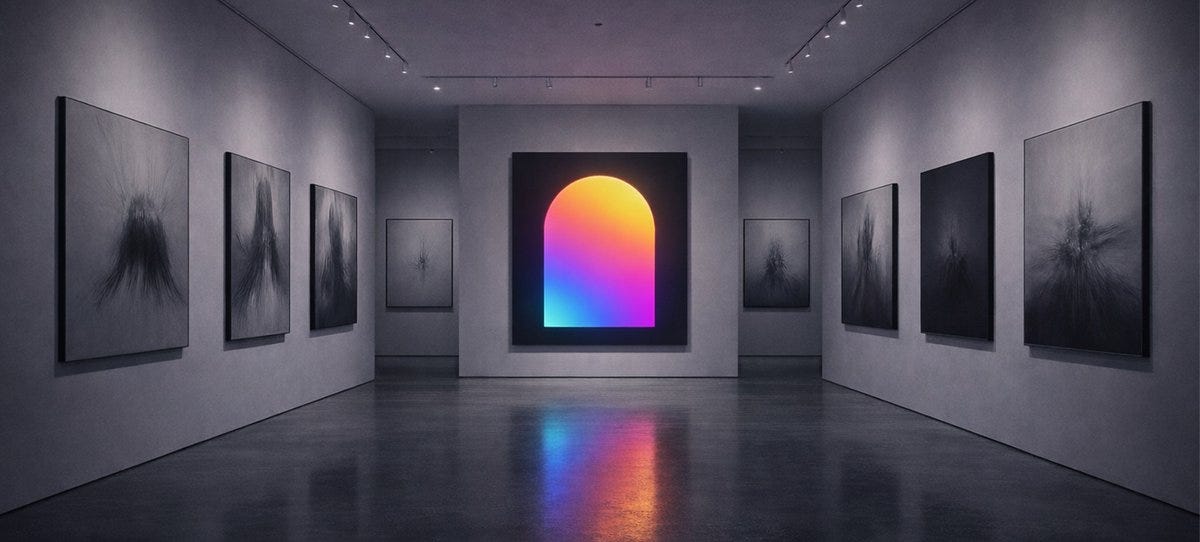
Community participation is not driven by features. It is driven by identity.
People do not join Discord servers because the product has a compelling use case. They join because the space feels like somewhere worth being. They stay because participating feels like it means something - because the project has a sense of self that is consistent, intentional, and worth aligning with.
This is why branding directly influences community growth. When a brand is sharp, consistent, and carries a clear identity, participating in that community becomes something people want to be associated with. They repost because it reflects well on them. They engage in Discord because the environment feels considered and serious. They complete quests not just for rewards, but because the experience feels cohesive and the project feels worth supporting. They apply as ambassadors because representing the project carries weight.
None of this happens by accident. It happens when the brand is treated as a strategic layer, not a visual one, and when every piece of content, every community touchpoint, and every visual asset is built to reinforce the same identity.
---
Consistency is the mechanism. Intentionality is the reason.
A brand that feels inconsistent communicates instability. A brand that feels generic communicates that there is nothing distinctive about the project worth remembering. A brand that feels intentional - where the visual system, the voice, the community experience, and the product all feel like they belong together - communicates that the team has thought carefully about not just what they are building, but who they are building it for and why.
That coherence is what turns a product into a community. It is what makes people proud to represent a project rather than simply use it.
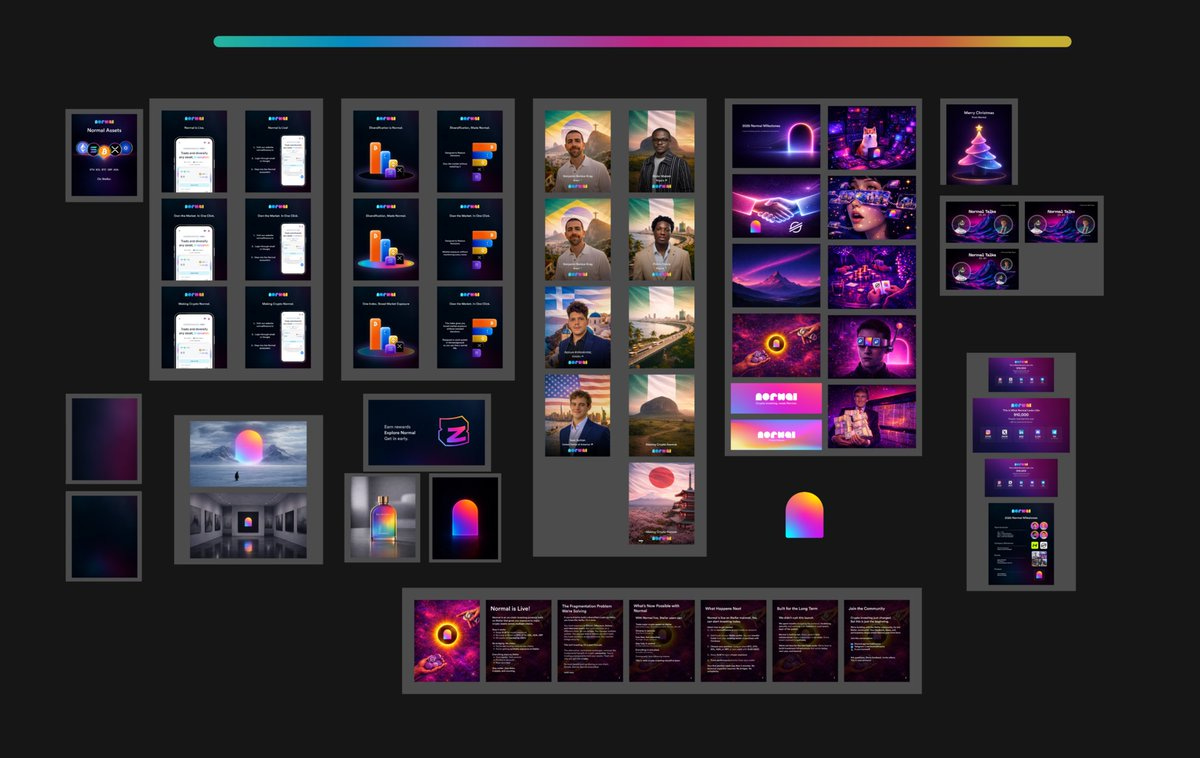
A look inside the brand system
Brand Is a System, Not a Logo File
One of the most common misunderstandings in Web3 branding is that a brand lives in a logo, a color palette, and maybe a font. Those are components. They are not the system.
A brand system is the full architecture of how a project presents itself across every surface - digital and physical. It is the profile picture that is immediately recognizable in a feed. It is the way the landing page feels when it loads. It is the tone of a tweet, the layout of a campaign graphic, the texture of a banner. It extends to the product itself: how the interface feels, how onboarding is handled, how the experience of using the product reinforces the identity the brand has already established.
And it does not stop at screens. When a brand shows up in physical space - through merchandise, through presence at events, through objects people can hold in their hands - it gains a dimension that purely digital branding cannot replicate. It becomes tangible. Real. Something people can wear, place on their desk, carry with them. That physicality communicates permanence and seriousness in a space where so many projects feel temporary.
If you are building a Web3 project right now and want to pressure-test your own brand, start with the fundamentals. Look at your profile picture - is it distinctive enough that someone scrolling quickly would recognize it? Look at your bio - does it communicate clearly and confidently who you are and what you are building? Look at the last ten things you posted - do they feel like they came from the same project, or do they look like they were made by five different people? These are not small details. They are the first signals people read, and they set the ceiling for how seriously your project gets taken.
---
Bringing Brand Beyond the Screen
Some of the most meaningful brand moments do not happen on a timeline. They happen in person.
There is something that shifts when someone encounters a project in physical space for the first time - when they see the logo on a shirt someone is wearing across a conference floor, when they pick up a printed piece or notice a desk stand at someone’s workstation. The brand stops being a digital abstraction and becomes something people associate with a lived experience.
These moments matter more than most teams realize. In-person touchpoints create a different kind of recognition and loyalty. They turn community members into walking proof that the project exists, that it is real, that people believe in it enough to carry it with them. That kind of proof is more powerful than any retweet.
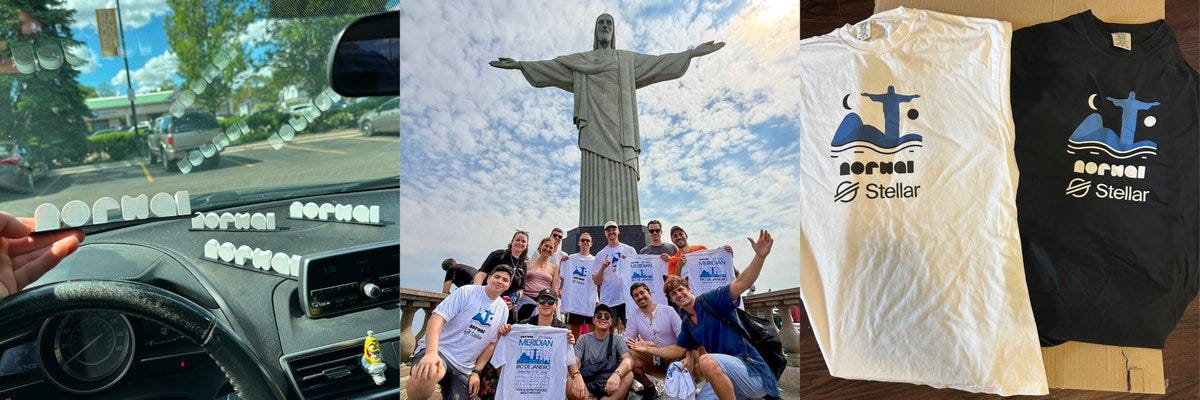
Normal x Stellar at Meridian 2025, Rio de Janeiro - custom merchandise, and over 100,000 impressions on X during the event
Branding at the Ecosystem Level
Everything discussed so far applies at the project level. But branding operates at a larger scale too - at the ecosystem level. And this is where it gets interesting. Stellar’s mission is to create equitable access to the global financial system by leveraging blockchain technology, specifically through the Stellar network. That mission is the foundation. But a mission statement alone does not define how the world perceives an ecosystem. The projects built on it do.
Every project that launches on Stellar shapes how the broader ecosystem is understood from the outside. The quality of its branding, the clarity of its communication, the experience it delivers - all of these either elevate the ecosystem’s reputation or dilute it. This is a responsibility that most teams do not think about, but it is real. When a project on Stellar presents itself with intention and quality, it does not just build its own community. It reinforces the case that this ecosystem is where serious, thoughtful builders are working.
This is the dynamic that excites me most. The idea that strong branding at the project level compounds upward - that the work done at the individual project level helps define the identity of the ecosystem as a whole. Stellar has built a strong foundation. The projects building on top of it have the opportunity, and arguably the responsibility, to extend that foundation into something the entire ecosystem can be proud of.
Making crypto accessible is not just a product challenge. It is a brand challenge. If the goal is to onboard the next wave of users - people who are not already fluent in DeFi or blockchain terminology - then the first thing they encounter cannot feel confusing, inconsistent, or careless. It has to feel considered. It has to feel, for lack of a better word, normal.
How I Think About This Work
This is the work I do every day as Creative Director. Not just designing assets or maintaining a visual system, though that is part of it. The work is ensuring that every layer of how a project is seen, understood, and trusted feels deliberate - that the brand is not something sitting beside the product, but something woven through it.
My approach starts with building a unified brand system in Figma - a single workspace that houses every graphic, every template, every visual component. That system is the source of truth. It means that whether the output is a social campaign, a product screenshot, a community graphic, or event collateral, everything traces back to the same identity. Nothing is made in isolation.
From there, the work extends outward to every touchpoint. Social presence is unified - profile pictures, banners, bios, and post formats all reinforce the same identity. Campaign graphics follow the same visual language. Product interfaces reflect the brand rather than existing apart from it. Physical materials - shirts, printed pieces, dimensional objects - are designed with the same care as digital assets. Community spaces are curated to feel consistent with the brand people encountered on their way in.
The goal is simple: no matter where someone encounters the project, it should feel like the same project. That sounds obvious, but achieving it requires treating every output as a branding decision, not just a content task.
---
The teams that understand this will build communities. The teams that do not will build products that no one feels compelled to talk about.
Brand is not the last thing you add. It is the first thing people see.
---
This is what I’ve been learning over the past few years building the Normal brand from zero to where it is today. I’m proud of the work, and we’re just getting started.
If this resonated with you, let’s connect. My DMs are open. So are Normal ’s.
We’re building infrastructure people believe in. And Web3 deserves brands worth believing in.
Jake Penzato - Creative Director at normalfinance.io
 | A guest post by
|
Thank you to everyone who read the article!
Follow up question:
What is your opinion on branding in Web3 and what do you think needs to be improved?
Making Crypto Normal 😎